An AI-disclosure policy should tell readers three things: what the technology did, which human is accountable, and where the newsroom refuses to use it. That is the shape of the published AI standards adopted across the industry since 2023 — major wire services and publishers rolled out public AI-use statements that share the same skeleton, differing mainly in how honestly they draw the red lines. A policy that does not name refusals is not a policy; it is a press release.
What are the disclosure levels readers can actually distinguish?
Readers do not care about vendor names; they care about the four honest categories:
- Human-made: reported and written by staff — the default, needing no label.
- Human-made with machine assistance: spelling and grammar support, transcription, translation drafts checked by a speaker — disclosed once in the policy, not on every item.
- Machine-drafted, human-verified: summaries and structured content generated from source documents and checked line by line — labeled on the item itself.
- Machine-generated, minimally supervised: the category a newsroom's policy should either refuse outright or label in the largest type it owns.
Where does the disclosure belong?
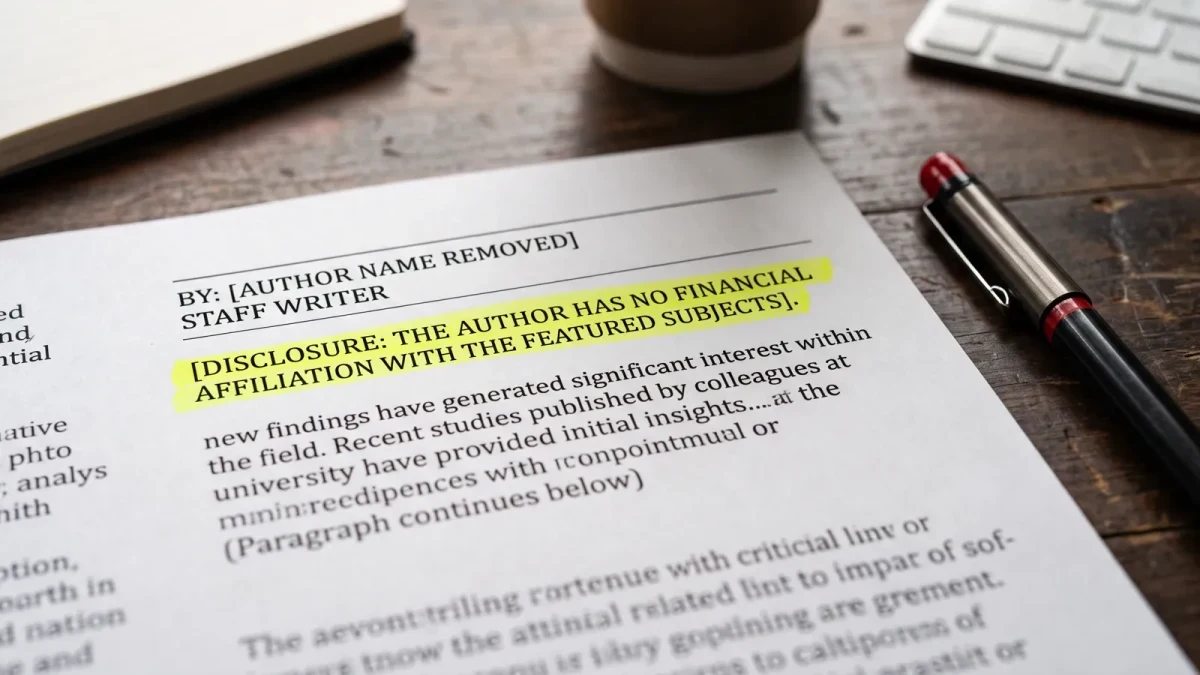
On the item, above the fold of the reading experience — the same placement logic as corrections. A single sentence, standardized wording, next to the byline or at the story's top. The site-wide policy page supports the label with detail: the approved tools by function, the verification steps for machine-drafted content, and the review date. Both surfaces state the accountable editor by role, because the question a serious reader actually asks is not "which model" but "who answers for this if it is wrong."
What should the policy refuse?
The refusals are where credibility is earned. The common ones in published standards: no unpublished machine output presented as reported journalism; no synthetic images of real people or events; no AI-generated quotes; no machine-drafted accountability coverage, crime coverage, or anything naming private individuals in failure; no publication of AI-detection accusations as fact, because the tools' error rates — especially against non-native writers — are documented and poor. A small newsroom's list can be shorter, but each line must be a rule the desk will actually enforce on deadline, not an aspiration.
What should the policy never say?
Two habits corrode trust. The first is vagueness as strategy: "we may use AI tools to enhance our journalism" discloses nothing and reads as a hedge written by counsel. The second is over-claiming the human element: describing heavy machine drafting as "editorially supervised" when the supervision was a skim. Audiences forgive tools; they do not forgive being managed. The policy's voice should match the newsroom's corrections voice — plain, specific, slightly self-critical.
How often is it revised?
Twice a year, with the revision date printed — the same visible-date discipline as standards pages. Capability changes arrive quarterly now, and a policy dated two years back signals that nobody at the outlet has thought about the question since it was fashionable, which is a disclosure of its own kind.
Frequently asked questions
Does translation count as AI use requiring labels?
Not per-item. Machine translation checked by a fluent editor is assistance; the site policy discloses it once. The exception is unedited machine translation published to reach an audience the newsroom cannot otherwise serve — that needs a clear label, because readers deserve to know no speaker checked it.
Should headlines disclose AI involvement?
If the headline itself was machine-generated and lightly checked, yes — headline accuracy is where reader trust is won and lost, and the label belongs where the risk is.
Can a policy cover user-facing tools like chatbots?
It must, if the outlet runs one: readers need to know a chatbot is answering from the outlet's archive, may err, and is not a journalist. Omitting the outlet's own consumer-facing AI from its AI policy is the most common gap in otherwise good standards.