Protest coverage succeeds or fails at the assignment desk. The decisions that matter — send two people, not one; decide the story's focus before arrival; agree what happens if someone is arrested or separated — take ten minutes and determine both reporter safety and editorial fairness. Press-freedom organizations including the Committee to Protect Journalists publish protest-safety guidance built from documented incidents, and their advice converges: preparation is protection, and the unprepared reporter becomes part of the story.
What gets decided before deployment?
- Focus: what is the protest about, who organized it, what is the documented context — the story is the grievance and the response to it, not the crowd's theater.
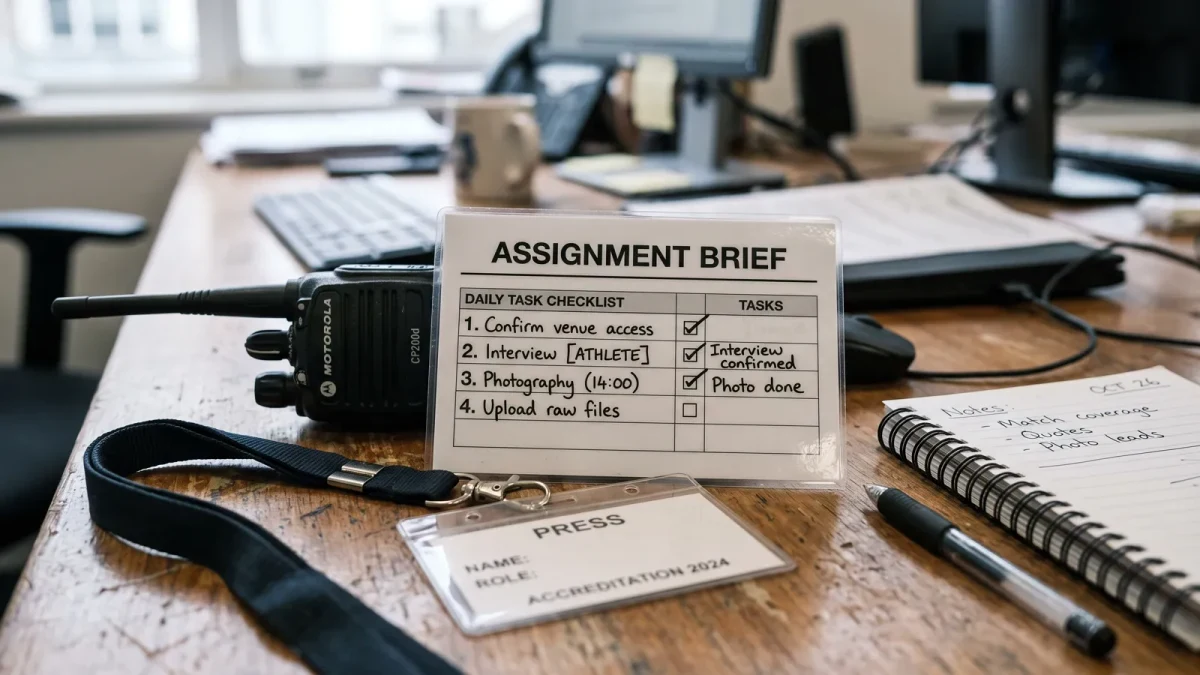
- Pairing: two journalists minimum; one works, one watches — at minimum a check-in schedule with the desk.
- Gear: accredited identification visible, protective equipment appropriate to expected conditions, phone backed up and secured with passcode rather than biometric unlock, which matters at a legal boundary.
- Arrest protocol: pre-agreed — the newsroom's number written on the reporter's arm, counsel identified in advance, and the desk's escalation list including the local press-association legal hotline.
- Boundaries: what the reporter does when police declare an unlawful assembly or issue dispersal orders — comply and report, from outside the line.
How is fairness maintained in a volatile scene?
By counting and attributing. Crowd size estimated with a method, not an adjective — area-based estimation techniques are public and teachable. Aggression attributed precisely: which side, how many, in response to what, per named witnesses and footage. The classic protest-coverage failure is symmetry-by-adjective — describing "clashes" without saying who acted — and the correction is the boring discipline of who-did-what sequencing verified against multiple recordings. Both the demonstration's message and the authorities' handling deserve the same verification standard.
What about the legal line?
Journalists in the United States have no general exemption from dispersal orders, and reporters have been detained on that exact misunderstanding; knowing the local rules before the assignment is part of preparation. Filming police activity in public is generally protected, and interference statutes have limits — the practical guidance is to film from a position that cannot be construed as interfering and to carry the outlet's counsel's number. The constitutional analysis belongs to lawyers; the assignment-desk version is a laminated card with the rules and phone numbers, issued before the shift.
How should the story treat agitators and exceptions?
In proportion, and named as exceptions only when verified. The documented pattern in protest coverage research — including analyses of how demonstrations are framed differently depending on their cause — is that a few broken windows can become the story of a ten-thousand-person march. The desk's protection is arithmetic: what fraction of the crowd, over what time span, and the same proportional lens applied to police conduct. Fairness here is not neutrality of sentiment but symmetry of scrutiny.
What does the desk owe the reporter afterward?
A debrief and, where needed, support — protest assignments are among the most likely to involve exposure to violence, and trauma-aware practice applies to staff exactly as to sources. Institutions that document press restrictions — arrests of, and force against, journalists — should receive the incident report; the aggregate record of how reporters were treated is itself accountability journalism that only the affected newsrooms can supply.
Frequently asked questions
Should reporters wear identification as press?
Yes in most U.S. contexts — visible accreditation prevents misunderstanding and documents status. The exception analysis is situation-specific; conflict-zone guidance treats marked and unmarked press differently for a reason.
What if police order a reporter to stop filming?
Comply first, contest later: record the order, comply, report it. The story of an unlawful order is written from safety, with counsel — not from inside a holding cell.
How do we cover a protest we cannot staff?
Verify and aggregate user-generated footage by the standard verification checklist — earliest version, geolocation, uploader contact — and say plainly what has and has not been verified. Absence is better than invention.