Trauma-aware interviewing rests on one move repeated throughout: the interviewee keeps control. The Dart Center for Journalism and Trauma, whose training resources have shaped newsroom practice since the 1990s, teaches that survivors can retell painful events safely when they know what is coming, can pause without penalty, and can decline any question — and that interviews conducted this way produce better material, not gentler material. The craft is learnable, and local reporters need it most: at a small outlet, the same reporter covers the fire, the family, and the anniversary.
This publication covers interviewing as journalism craft; it is not clinical advice. Reporters experiencing distress themselves should seek professional support.
What happens before the interview matters most
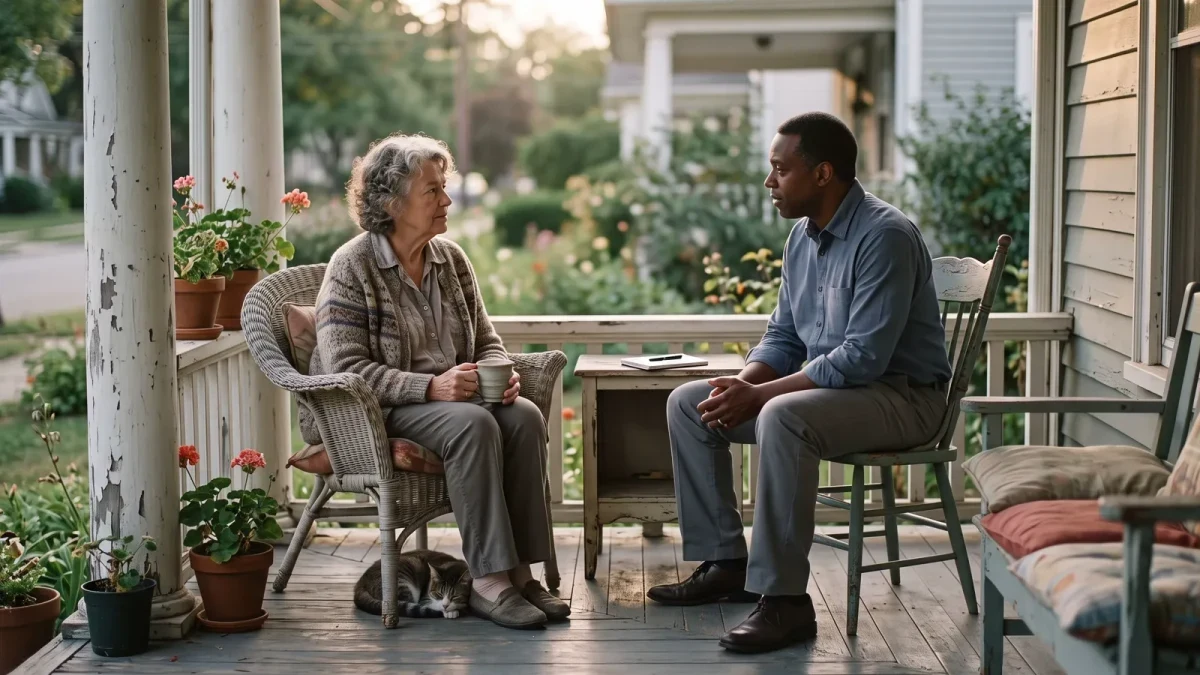
Preparation sets the conditions. Contact through a channel the person controls — text, not a knock on the door. Explain the story, the likely questions, and the timeline before any meeting; ambushing a survivor with the central question produces shutdown, not candor. Offer choices of time, place, and support: the presence of a relative or friend, a walk rather than a sit-down. And state plainly what publication means — when it will run, whether names will be used, what the person can decline — because informed consent given calmly protects both the source and the story.
What are the moves during the interview?
Practitioners trained in the method use a consistent set:
- Open wide, then follow: "Tell me what you feel able to share" before any specific question; the survivor sets the route.
- One question at a time, no stacked follow-ups — compound questions force triage under stress.
- Signal exits: "We can pause or skip anything" — said at the start and honored instantly.
- Let silence sit: counting to five before rephrasing gives memory time to surface.
- No "how did you feel" ambush: ask about the moment, not the emotion; the emotion arrives on its own, or it does not, and either answer is usable.
What should a reporter never do?
Three behaviors do documented harm. Pushing for sensory detail of the worst moment — the question style of true-crime interrogation — re-exposes the survivor for color the story rarely needs. Surprising the source with material late in the interview ("a neighbor says you were warned") converts an interview into a confrontation the person cannot leave safely. And promising therapeutic outcomes — "this will help you heal" — is a claim no reporter can make; the honest framing is what the story might accomplish publicly, and even that belongs to the survivor to weigh.
What about accuracy and trauma memory?
Trauma memory is fragmentary by nature — detail vivid at the center, absent at the edges, sometimes sequenced oddly. That is not deception; it is how memory works under threat, and the Dart Center's guidance is direct about it. The reporting response is corroboration elsewhere: documents, timelines, other witnesses carry the precision load, while the survivor's account carries what only they can tell. Frame stories so that fragments are quoted as fragments; reconstructing a survivor's memory into seamless narrative invents certainty the source never claimed.
What does the reporter owe herself?
A debrief and a boundary. Editors who run trauma-heavy beats build in a check-in after difficult interviews, rotation on stories that run for weeks, and permission to hand off the anniversary story to a colleague. Hearing trauma changes the listener — journalism's occupational acknowledgment of that fact is newer than the knowledge, but it is now standard in the guidance, and a small newsroom that adopts only one trauma practice should adopt this one.
Frequently asked questions
What if the survivor wants details removed after the interview?
Take the request seriously and quickly. Pre-interview consent about what will run prevents most conflicts; where a request still arrives, the editor weighs harm against news value with the survivor on the phone, not after publication.
Should reporters ask about injuries or deaths of loved ones at all?
Yes, when the story requires it, with warning and permission: "I need to ask about the night itself. Are you able to go there today?" The question is asked once, not re-asked in variations.
Does this apply to non-survivors — witnesses, officials, jurors?
Yes. The method is universal for anyone exposed to distressing events; survivors simply have the highest stakes and the strongest claim on the reporter's patience.