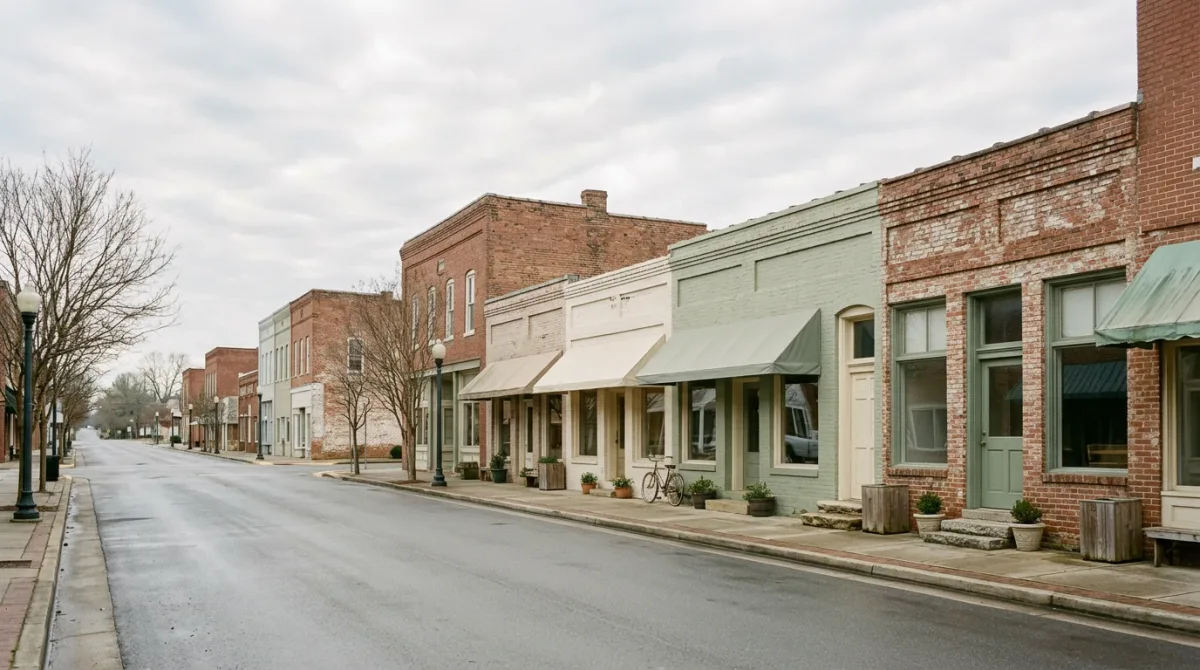
As of Northwestern University's Medill School 2023 State of Local News report, 204 US counties had no local news outlet — no paper, no digital site, no public radio — and the country had lost roughly a third of its newspapers since 2005, leaving about 2,900 communities with diminished or vanished coverage. The closures are not evenly spread: the Medill analysis found news deserts are likelier in counties with lower median income and older populations, which is to say the market withdraws news first where it may matter most.
What does the closure record actually show?
The count comes from Medill's Local News Initiative, which tracks outlets county by county. Its 2023 report recorded an accelerating pace: an average of 2.5 newspapers closing per week in 2023, up from two per week in the prior years of the survey, with the losses concentrated in weeklies — the small papers that were often the only record of school boards, county budgets, and courthouse auctions. Most closures leave no successor: the report distinguishes between merged papers and true news deserts, and the deserts are the growing category.
The economics are not mysterious. Print advertising, the historic subsidy for civic reporting, collapsed as classifieds and retail ads moved online; the report documents newspaper ad revenue falling by more than 80 percent from its mid-2000s peak. A weekly with a thin margin simply stops.
What happens to a town when the paper closes?
The documented consequences run through civic mechanics rather than sentiment. Peer-reviewed research on municipal borrowing, including a 2018 study in the Journal of Financial Economics by Gao, Lee, and Murphy, found that communities losing newspaper coverage saw higher municipal borrowing costs in the following years — roughly 5 to 11 basis points — which the authors attribute to reduced public scrutiny of local finances. Other published studies associate newsroom loss with lower voter turnout in local races and fewer candidates running for local office.
The mechanism is simple. A budget meeting covered is a budget meeting conducted differently. Remove the reporter and the meeting still occurs — with fewer people in the room, and none of them writing it down for the neighbors.
Who is filling the gap — and who isn't?
The record shows three partial answers. Philanthropy has funded a growing nonprofit news sector — the Institute for Nonprofit News counted more than 400 member organizations by 2023 — concentrated in metro areas. Statehouse and investigative nonprofits cover regionally what locals once covered locally. And a fraction of towns are covered by what researchers call 'pink-slime' outlets: sites dressed as local news but producing agenda-driven content, documented in academic and journalistic analyses including work published through university journalism programs.
The gap in coverage of the ordinary — the sewer bond, the sheriff's budget — remains largely unfilled everywhere. Nonprofits chase impact stories; the school board has no patron.
What is being tried, and what has the record shown?
Public policy experiments are at early stages, with documented results still thin. The sums involved are small against the loss: local journalism's revenue decline measured in the report runs to billions of dollars annually, while public and philanthropic support is in the hundreds of millions. The record so far establishes the direction of the gap, not the arrival of a fix.
What remains unknown?
Whether the newer models — nonprofit, cooperative, publicly supported — can cover ordinary civic process at anywhere near the old scale. The honest close of the record is that the closures are documented and their fiscal and civic costs are measured; the replacement is not yet.
For more context, read What a News Desert Actually Measures — and What It Misses.
For more context, read What the Local News Desert Numbers Actually Show.
For more context, read What Actually Counts as a "News Desert".