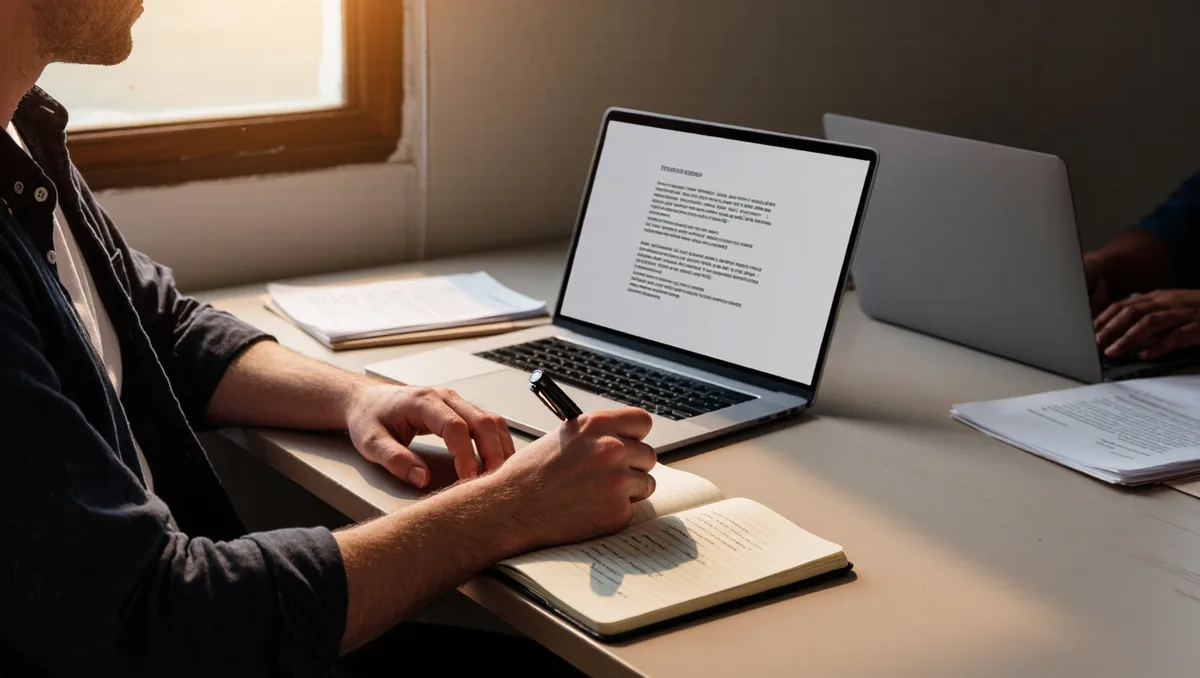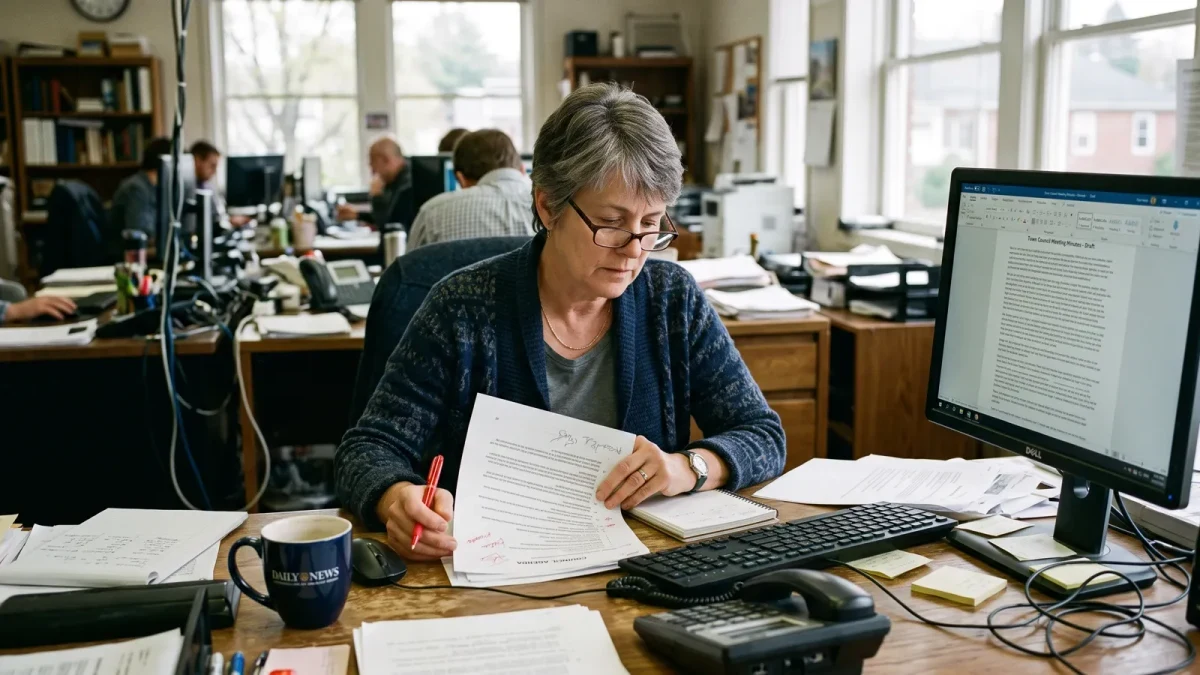
Small newsrooms can use generative tools for first-draft summaries and structured content only when three controls are fixed in advance: a named human editor approves every published word, the draft is checked against the source material line by line, and the audience is told what the tool did. The Associated Press, which has published automated corporate-earnings stories since 2014, set the template — automation expanded output, but editorial ownership of the output never moved to the software.
This publication publishes information and analysis about journalism practice; it does not provide legal or technology-procurement advice. The workflow below reflects published newsroom standards and vendor guidance as of 2025.
What should AI ever draft in a small newsroom?
Start with content that is short, factual, and derived from a document your newsroom already verified: meeting-roundup briefs, calendar digests, weather and event listings, recap boxes under a staff-written story, and translation drafts for a bilingual audience. These formats carry low fabrication risk because every claim maps to a line in a source document sitting next to the editor.
Keep investigative narrative, crime coverage, anything with named private individuals, and any story about a person's failure or misconduct out of the drafting queue entirely. Errors in those categories are not typos; they are corrections with a human cost.
What does the line-by-line check look like in practice?
Before an AI-assisted draft is scheduled, the editing editor compares every factual sentence in the draft against the source document. Three failure patterns recur and are worth naming in your policy:
- Invented specifics: a date, dollar figure, or job title that appears plausible but exists nowhere in the source.
- Merged entities: two similarly named bodies, bills, or people collapsed into one.
- Confident framing: a causal claim the source never makes.
If a sentence cannot be traced to the source document, it is deleted, not repaired. Repairing an untraceable sentence teaches the desk to trust paraphrase over evidence.
How do you tell readers without a legal-ese label?
Use one fixed disclosure line, placed where the summary appears, in plain language. A workable pattern: "This summary was drafted with AI assistance from [document name] and was edited and verified by [editor name]." Naming the editor matters as much as naming the tool — it preserves the accountability chain that readers of small outlets actually rely on, because in those markets the byline is often the product.
Do not bury the note in a site-wide policy page. Published standards from wire services and large publishers that disclose AI involvement all place the notice on the item itself, and a local audience deserves the same visibility.
What belongs in a one-page newsroom policy?
Write the policy before the first draft is published, and keep it to what you will enforce. At minimum:
- Approved formats for AI drafting, listed explicitly.
- Prohibited formats, listed explicitly.
- The named human editor accountable for each published item.
- The disclosure sentence, standardized.
- The correction path — AI-assisted items follow the same corrections process, at the same speed.
What does this mean for a newsroom of five?
The realistic gain is hours, not headcount. Editors at small outlets report that structured summaries and listing digests are the first things dropped when a council meeting runs long — automation makes the dropped coverage possible again. What it does not do is replace the reporter in the room, the follow-up question, or the relationship with the source who calls back. Budget for it accordingly: a drafting tool is a productivity purchase, not a staffing decision, and treating it as one is how trust survives the transition.
Frequently asked questions
Does using AI summaries require disclosing the vendor?
No, and vendor names change often. Disclose the function (drafting assistance), the source document, and the accountable human editor. Those three facts are what a reader needs to judge the item.
Should AI-assisted items carry a staff byline?
Credit the verifying editor, not the tool, and keep the disclosure line adjacent. A byline signals accountability; the disclosure signals method. Both belong, in different places.
What is the first format a two-person newsroom should automate?
A weekly public-meeting digest built from agendas and minutes your reporter already collects. The source documents are internal, the format is repetitive, and the errors are easy to catch before publication.