A misinformation tipline — a phone number, form, or messaging-channel inbox where readers send suspicious claims — works when the newsroom treats it as a service with a queue, a response standard, and a published record of what was checked. Outlets that run tiplines this way, from large fact-checking desks organized under the International Fact-Checking Network to small local experiments, consistently report the same benefit: the tips reveal what the community is actually asking, which rarely matches what editors assume it is asking.
What makes a tipline worth running?
The core value is early warning. Viral claims reach a newsroom's own family group chats days before they reach the analytics dashboard; a tipline shortens that gap. The second value is editorial: recurring tip patterns are a story list. Ten residents forwarding the same doctored image of a local flood is both a fact-check and evidence of an information vacuum the newsroom can fill with accurate coverage of the actual event.
What is the commitment that makes or breaks it?
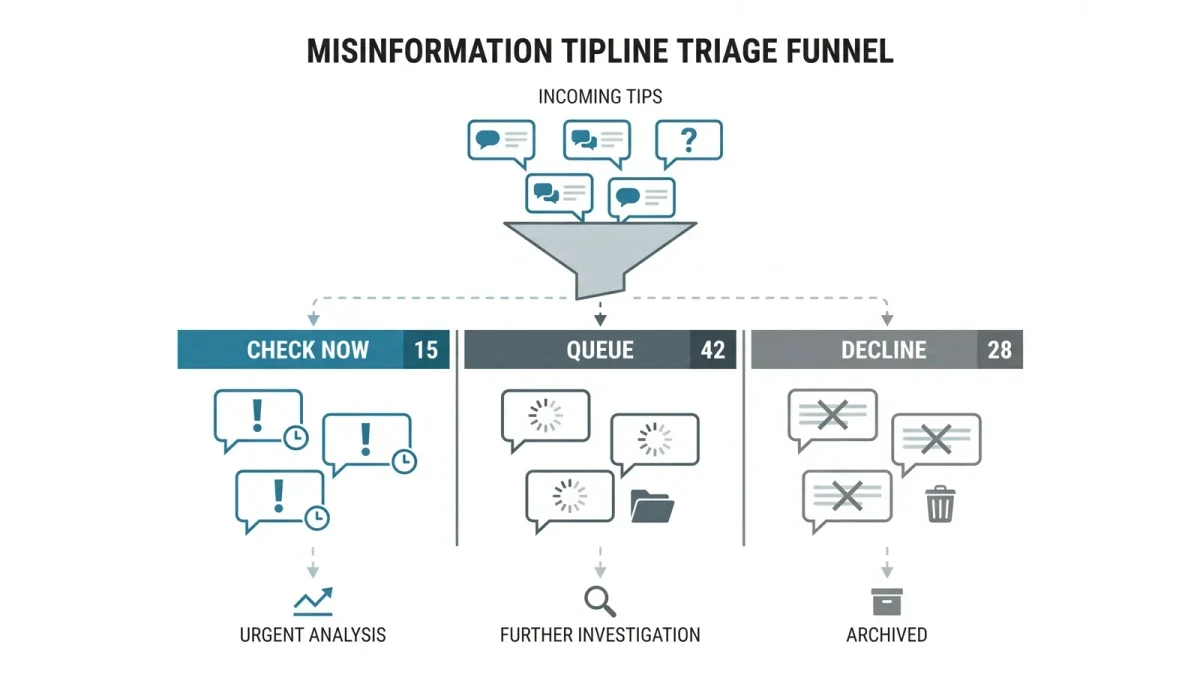
Response. A tipline that swallows messages teaches readers the outlet does not care, and the next rumor goes unchecked and unreported. Sustainable programs commit to two things: an acknowledgment to every tipsend, and a decision — checked now, queued, or declined with a short reason. Fact-checking organizations that publish their turnaround practices describe a simple triage that a small desk can copy: scale of spread first, harm second, checkability third. A claim circulating among three people and impossible to verify is a polite decline; the same claim in the school-district community with a public document that settles it is tomorrow's story.
How should answers be published?
Two formats carry most of the value. The short format is a recurring "asked and answered" column or broadcast segment — reader question, one-paragraph answer, source link. The long format is the occasional deep fact-check when a claim is both widespread and hard to kill. Both formats should credit the community's role: "a reader sent us this" is not a confession of thin coverage, it is a demonstration that the channel works, which in turn raises tip quality.
What burns tiplines out?
Three failure patterns recur. Volume without triage — every claim treated as equally urgent until the staff quits. Hostile capture — the inbox filling with bad-faith submissions designed to waste time, which published fact-checking desks increasingly manage with rate limits and public criteria. And the verification trap — arguing with submitters who do not want answers. A workable rule used in practice: the newsroom answers the question in public, once, and never conducts the debate in the tipline itself.
Where should the tipline live?
Where the rumors already are. A form on the newsroom's site reaches loyal readers; a number on messaging apps reaches the group chats where local rumors actually circulate. Several local operations publish the same tipline across web form, SMS, and messaging apps, with all inputs landing in one queue. The channel choice is less important than the promise printed everywhere the number appears: what happens after you send.
Frequently asked questions
How many tips justify the program?
Dozens a month sustain a small desk; hundreds suggest a strong story list. The failure signal is not volume but silence — a public channel that produces nothing indicates the community never learned what it was for.
Should tipsters be anonymous?
Yes, as a default option. Many useful tips come from people inside workplaces or families who will not attach a name. Verification of the claim, not the identity of the tipster, is the newsroom's job.
Can a tipline double as a story-tip channel?
It can, with separate queues. Mixing rumor checks and story tips in one inbox makes triage impossible; two labels at intake keep both flows usable.