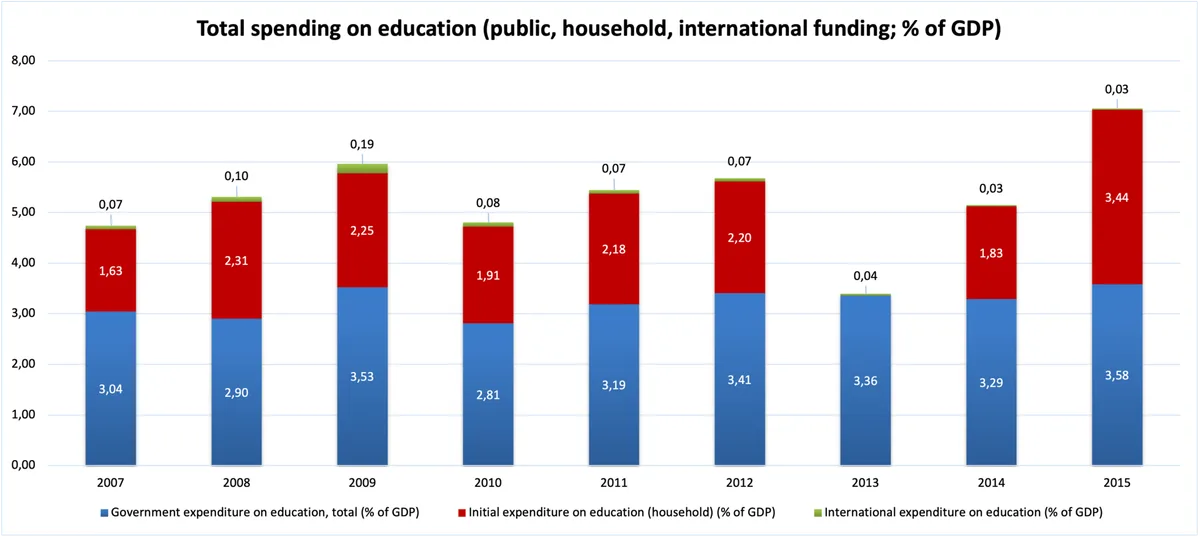
Public media funding rarely comes from one place. A nonprofit broadcaster or newsroom typically blends member dues from listeners and readers, grants from foundations, underwriting from businesses, and some form of government or tax-based support. The mix matters more than any single line item, because each stream buys something different — and each one attaches its own conditions.
The operating problem for any manager is that these streams behave differently. Dues arrive in small amounts but renew. Grants arrive in large amounts but expire. Underwriting sits somewhere in between. A newsroom that leans too hard on any one of them inherits that stream's risks, not just its money.
The word itself is doing work here. As the Cambridge Dictionary makes clear in its entry on "public", the term covers both things owned by the state and things open to everyone — and English usage slides between the two. That ambiguity runs straight through the funding debate: a "public" outlet can be taxpayer-funded, donor-funded, or neither, and audiences rarely know which.
What does member revenue actually buy?
Membership is the stream with the fewest strings attached. A member gives a modest recurring amount and, in return, usually gets little more than the product itself and a sense of ownership. There is no contract, no deliverable and no approval right over coverage.
That independence is the appeal — and the constraint. Small gifts mean small budgets. A membership model also rewards outlets that serve a defined community well, because renewal is the whole game. Churn, not acquisition, decides whether the model works. This is the same arithmetic any subscription business faces: the plan only holds if people keep paying after the first year. We covered a connected angle in The UK's Amplify Plan Puts £12 Million Behind Local Media — What Practitioners Should Note.
For readers trying to judge an outlet, the practical signal is disclosure. Outlets confident in their member base publish how much of their budget membership covers. Outlets that don't are usually relying on something else.
How do grants change a newsroom?
Foundation grants fund most of the ambitious nonprofit journalism being done today, and they come with a funder whose name belongs in the story — Why Nonprofit Newsrooms Are Leaning Harder on Big Donors looks at what happens when a single large donor carries too much of the budget. The pattern is general: grants let a newsroom do work the market won't pay for, but they expire, and renewal is never guaranteed.
The honest tension is editorial, not financial. A funder with a policy interest can shape coverage without ever issuing an instruction — simply by what it chooses to fund again. Settled professional consensus, reflected in published ethics codes, says funders get disclosed and get no editorial control. What stays a judgment call is how close is too close when a funder's mission and a newsroom's beat overlap.
What is underwriting, and how is it different from advertising?
Underwriting is sponsorship language built for a noncommercial setting. A business pays for acknowledgment — its name, a factual description of what it does — rather than a persuasive ad. The rules that separate acknowledgment from advertising are usually set by the regulator or by the outlet's own standards, and they typically bar calls to action and price claims.
For the newsroom, underwriting is steadier than spot advertising but smaller. For the audience, the tell is tone: if the acknowledgment starts sounding like a pitch, the line has moved. That line is the main thing underwriting funding asks an audience to trust.
Where does government money fit in?
Government support takes different shapes: direct appropriations, indirect support through tax treatment, or fees and levies written into law. The design question in every case is the same — how do you route public money to journalism without routing political control with it? Systems that insulate the money behind multi-year or arm's-length arrangements trade political safety for less flexibility. Systems where the legislature votes the budget annually get the reverse.
Our analysis: the funding mechanism is a better predictor of independence than the funding amount. A large budget with a short political leash is more fragile than a modest one with a long one.
What this means for readers and supporters
Three checks do most of the work. First, read the funding disclosure page: it should name the major funders and show the rough share each stream contributes. Second, ask what the dominant stream is — a member-funded outlet and a grant-funded outlet face very different pressures. Third, watch for disclosure in the coverage itself: funders named in stories about funders is the practice working as intended.
None of these checks settles whether an outlet is trustworthy on its own. But they turn a vague question — who pays for this? — into a specific one, which is the version a reader can actually answer.
The takeaway
Public media funding is a portfolio, not a paycheck. Dues buy independence at small scale, grants buy ambition with an expiration date, underwriting buys stability with a tone limit, and public money buys scale with a governance question attached. The outlets that last are the ones that can name the trade-off each stream imposes — and the audiences best served are the ones who know which trade-off they're underwriting.