The World Press Freedom Index, published annually since 2002 by Reporters Without Borders (RSF), measures the environment for journalism in a country — not the quality of its journalism, and not a simple ranking of where journalists are safest. Since 2022 the index scores each country on five contextual indicators — political, economic, legislative, social, and security — and ranks countries on a combined score. Reading it well means knowing what those indicators measure and what a rank movement does and does not mean.
What do the five indicators actually capture?
Each is scored from quantitative and survey data combined with responses from press-freedom specialists and RSF's network:
- Political: censorship pressure, media independence from political actors, legislative frameworks.
- Economic: ownership concentration, advertising pressure, the economic viability of journalism.
- Legislative: laws and their application — defamation, national security, registration requirements.
- Social: public hostility toward journalists, disinformation climate, trust.
- Security: imprisonment, violence, impunity for crimes against journalists.
Crucially, the published rankings weight the political indicator while the full picture lives in the sub-scores — a country can rank respectably while its security sub-score tells a different story, and vice versa.
What are the standard misreadings?
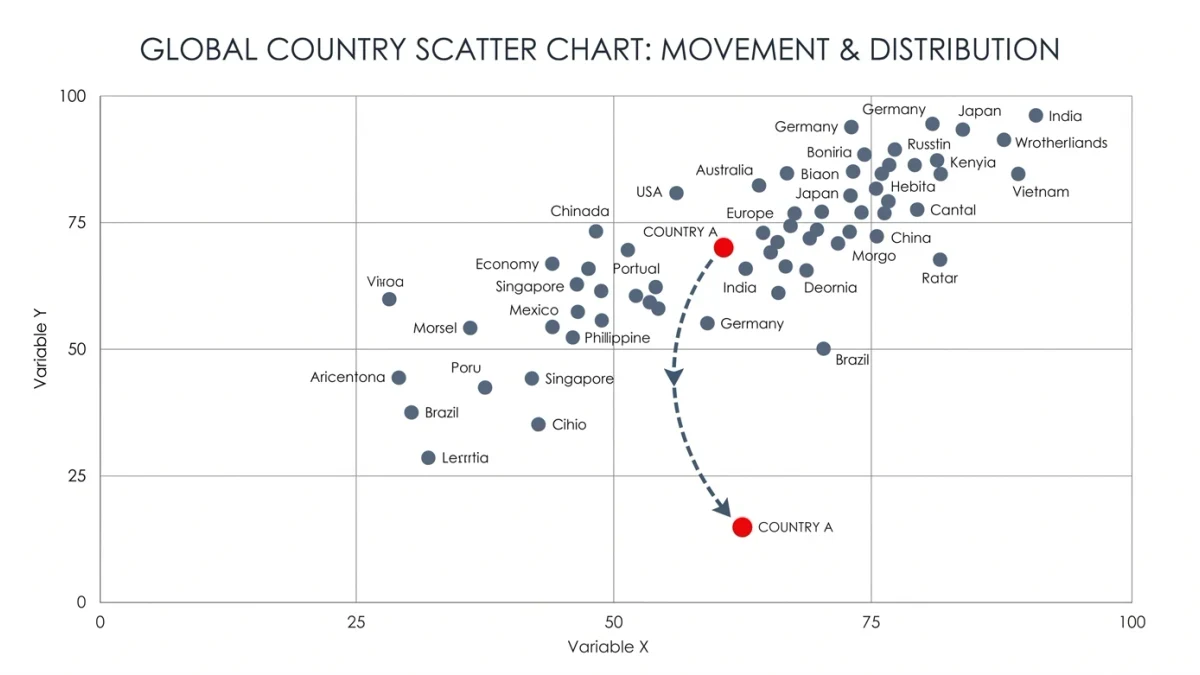
Four recur every May when the new edition lands. Trajectory from rank alone: a two-place fall may reflect scoring refinements or other countries' changes more than a domestic deterioration — RSF itself cautions against year-over-year rank comparisons and points to scores and indicator trends instead. Index-as-report-card: "our journalists are fine, we rank 20th" — the social indicator can document hostile public sentiment even where no journalist has been harmed. Headline without the survey layer: parts of the scoring rest on qualified-respondent surveys, which measure expert perception; treat a single indicator as a finding to investigate, not a settled measurement. And cross-index confusion: other indices — the Committee to Protect Journalists' counts of imprisoned journalists, for instance — measure different things and disagree in instructive ways.
How should a newsroom use it editorially?
As a source of documented questions rather than verdicts. A falling economic-indicator score is the hook for a story on media ownership rules in the outlet's own country; a weak security score is the context for profiling the cases behind it — RSF publishes the underlying incident documentation. The honest formulas: name the index, name the year, name the indicator, and link to the methodology page when writing; never report a rank change without the score change; and treat any single-year movement inside the margin of methodological noise as a trend only with corroborating evidence.
What can local journalists take from it outside the capitals?
The index's social indicator — the climate of hostility toward the press — describes an environment local reporters experience before any national statistic captures it. The practical use is defensive: newsroom safety planning and hostile-environment practice make sense in proportion to documented hostility, wherever the country ranks. And for coverage of colleagues abroad, the index's case documentation — imprisoned journalists, by name and case — is the durable story, updated continuously between annual rankings.
Who else measures this?
A healthy habit is triangulation: RSF's environmental index, CPJ's imprisonment and fatality counts, the UNESCO observatory of journalist killings, and the academic datasets that track media freedom over decades. They disagree at the edges — one country's rank can differ by twenty places between indices — and the disagreements are where the real analytical story usually lives, because each dataset's definition of "freedom" encodes a theory of what threatens journalism.
Frequently asked questions
Why did the methodology change in 2022?
RSF moved from counting abuses to scoring environments — abuses alone rewarded quiet suppression over loud repression. The cost is comparability: pre-2022 and post-2022 figures are different instruments, and honest analysis says so.
Is the index politically biased?
Its methods are published, its respondent network is disclosed in general terms, and its findings displease governments of every alignment in different years — which is the pattern of a measurement with a method rather than a message. Read the methodology and judge for yourself; it is public.
Can a high-ranked country still be bad for journalists?
Yes — the social and economic indicators regularly document pressures in established democracies that the headline rank softens. The sub-scores, not the rank, are the journalism.