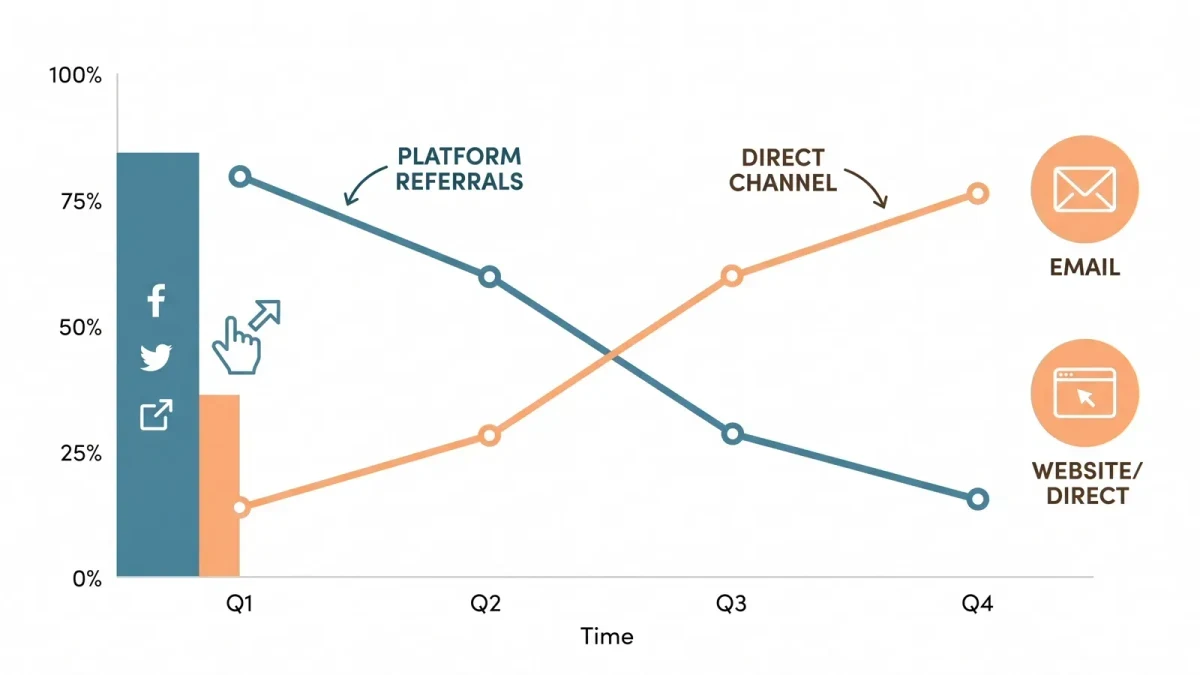
The decline in social-platform referrals to news sites is structural, not cyclical. Meta has spent years reducing news content's visibility — ending news page deals and deprioritizing links — and referral traffic from the major platforms to publishers has fallen steadily in industry analytics since the late 2010s, a trend the Reuters Institute's Digital News Report has documented across markets. The outlets that adapted treated the answer as distribution engineering: build channels no platform can throttle. The order that works is email first, site habit second, everything else optional.
Why is the decline permanent this time?
Three reinforcing causes. Platforms learned that news content generates controversy and low engagement-time relative to its cost. Recommendation systems across the industry shifted toward video and creator content, which keeps users on-platform. And regulatory and deal-making fights — Australia's bargaining code in 2021 and its successors — made news a liability line-item in platform earnings calls rather than a prestige one. Each cause is a business decision, which is exactly why no editorial strategy reverses them.
What does the pivot actually consist of?
- Email newsletter as the front door. The email list is the only audience asset with no algorithm between the newsroom and the reader. A weekly product with a fixed slot builds an appointment habit that social feeds never provided.
- One destination habit. A site that loads fast, publishes on a schedule readers can learn, and answers a recurring local question — the morning bulletin, the weekend calendar — earns direct visits without any platform's help.
- Text messaging. Where the audience skews older or the market is small, an SMS digest outperforms every social channel on reach reliability.
- Presence without dependence. Post to platforms where the audience is, but measure direct traffic, not followers; the platform account's job is discovery, not distribution.
How fast should a newsroom migrate?
Faster than feels comfortable, because the list compounds slowly. A workable year-one target used across reader-revenue programs: convert a meaningful share of platform-referred readers to email subscribers, with a subscription form in every story and a single newsletter promise worth the signup. The conversion ask works best when tied to coverage the reader came for — "get the council recap every Friday morning" beats "subscribe for updates" everywhere it has been tested.
What should newsrooms stop doing?
Stop staffing platform-native production for platforms that do not reciprocate. The telling metric is referral minutes per staff hour: when a channel consumes real reporting time and returns declining reach, the honest budget move is to automate posting and reinvest the hours in the direct products. Also stop counting followers as audience in board reports — an audience metric the newsroom cannot email is not an asset, it is a platform's asset.
What is the upside in a smaller distribution world?
Directness. Outlets that lived on platform spikes rented volatile attention; outlets with direct channels own smaller, denser relationships — exactly the relationships reader revenue requires. The platform decade grew reach without growing loyalty; the post-platform decade reverses the trade, and the newsrooms that moved early report that the smaller numbers pay better.
Frequently asked questions
Should a newsroom delete its social accounts?
No. Platforms remain where new readers discover outlets, and emergency information belongs where residents already are. The rule is measurement: judge the accounts by direct traffic they seed, not by follower counts.
Which channel should a two-person outlet pick first?
Email, then nothing else until it runs on schedule for six months. Each additional channel divides the same two people; sequencing beats spread.
How long does the migration take?
Plan on one to two years to rebuild a meaningful share of lost referrals as direct habit. The lists that survived platform cuts were built years earlier — which is the argument for starting this quarter.