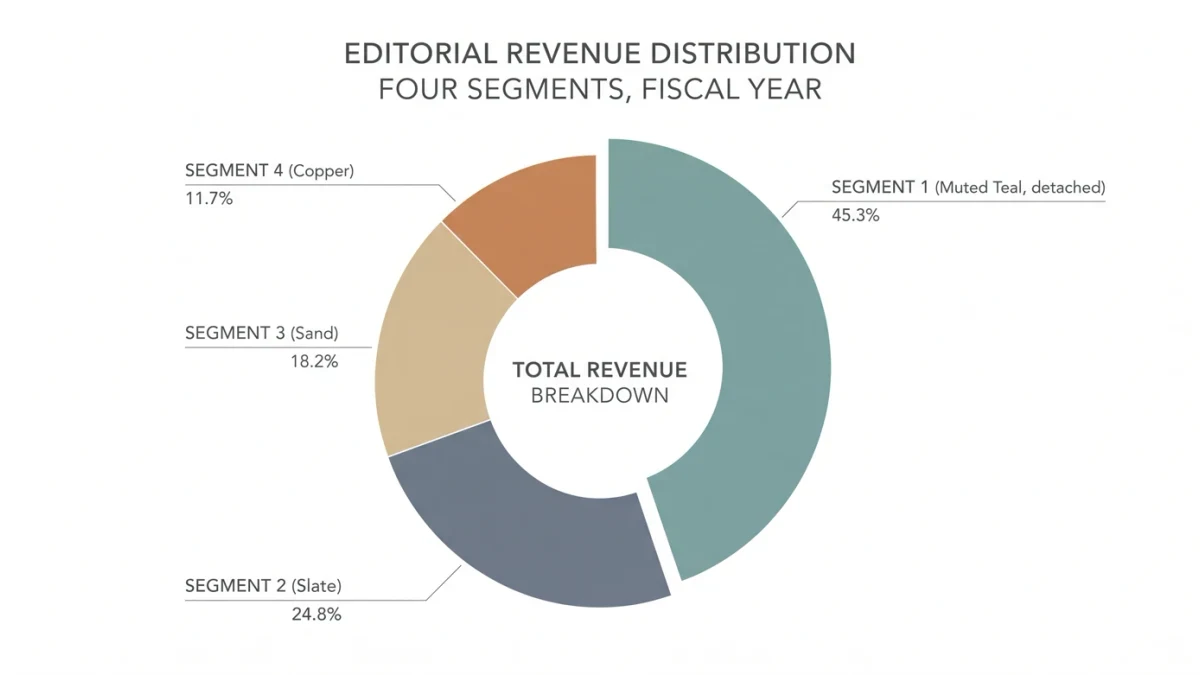
Combined revenue across the 412 digital-first nonprofit newsrooms surveyed by the Institute for Nonprofit News topped $750 million in 2025, up 14 percent from 2024, even as 36 percent of those outlets reported charitable-giving declines they attributed to the political climate, according to the group's 2026 INN Index, published June 9, 2026.
Where is the growth actually coming from?
The topline number masks a shift inside the mix rather than a uniform lift. Individual giving grew to 33 percent of nonprofit newsroom revenue in 2025, up from 29 percent in 2023, even as major gifts stayed concentrated: donations of $32,000 or more accounted for 64 percent of all individual giving reported to the 2026 INN Index. Median revenue per outlet held roughly flat at $525,000, comparable to 2024 — growth at the aggregate level, in other words, is arriving unevenly, concentrated in outlets with the staff and infrastructure to run major-donor programs.
Local outlets now make up 54 percent of INN's roughly 500-member network, up from 51 percent a year earlier. Sector researchers describe the target revenue mix as a "three-legged stool" — foundations, individual donors, and earned revenue each carrying roughly a third of the load — a balance most outlets still haven't reached.
What it means for practitioners
The trade-off shows up in overhead: revenue-generation spending rose from about 10 percent of nonprofit newsroom operating budgets in 2019 to 16 percent in 2025, and outlets running four or more revenue streams grew from 38 percent of the field in 2022 to 49 percent in 2025 — diversification that costs staff time before it pays off in stability. For editors weighing whether to build a major-donor program, the data argues for realism: courting large individual gifts can offset foundation pullback, but it adds fundraising overhead that a four-person newsroom — the field's median local-outlet staff size — may not have room to absorb without cutting into reporting capacity.