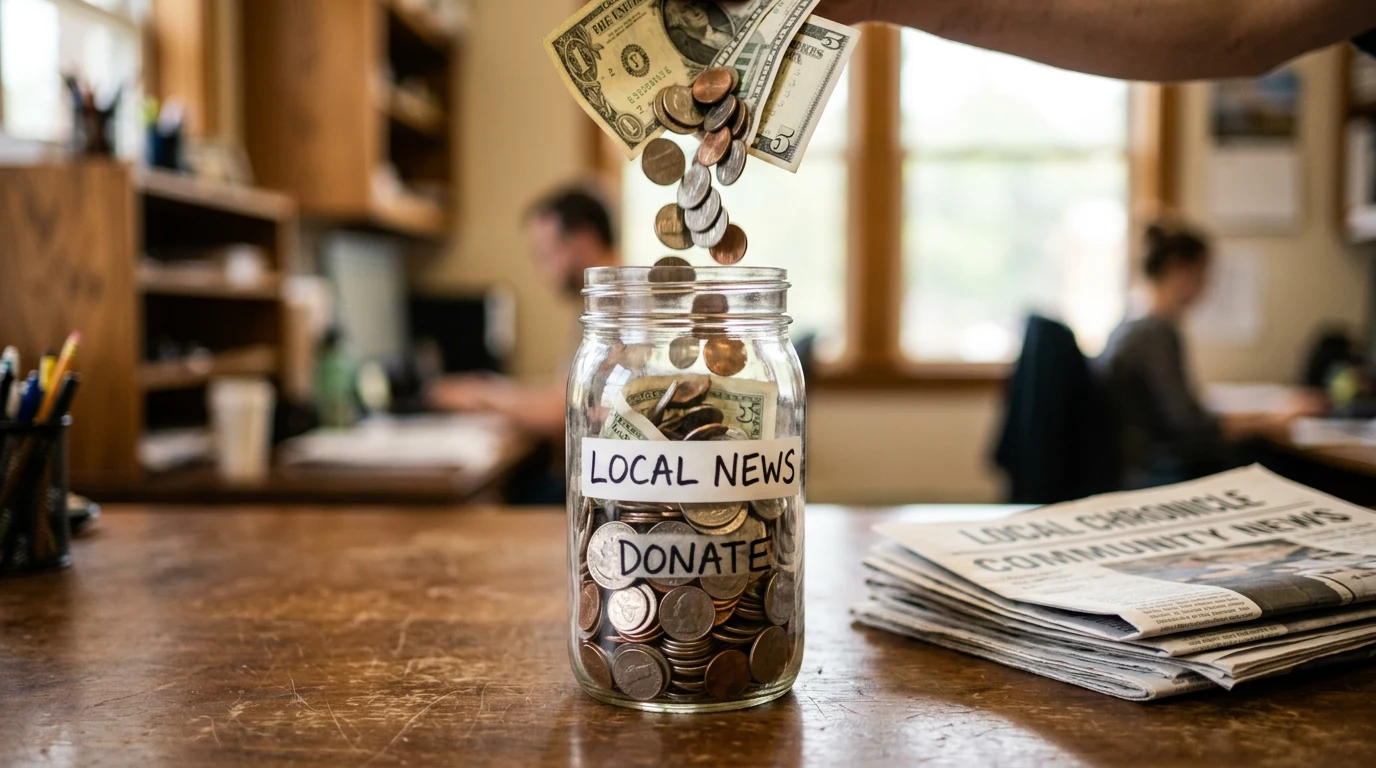
The difference between donations and membership is the relationship, not the transaction. Donations ask readers to fund coverage; membership asks them to join something with a name, benefits, and an ongoing conversation. For a newsroom that publishes daily and can email its audience weekly, membership reliably outperforms one-off giving, because recurring revenue compounds. For a newsroom that publishes twice a month, a membership promise of intimacy is a promise it cannot keep — a strong donations operation is the honest choice.
This publication covers business models as journalism practice; it does not provide financial or tax advice. Nonprofit tax rules differ by jurisdiction and a professional should review any program launch.
What does each model actually require?
Both models look simple from the outside. The operational difference is what happens after the first payment:
| Requirement | Donations | Membership |
|---|---|---|
| Contact cadence | Around campaigns and year-end | Continuous — welcome series, renewals, exclusives |
| Staff time | Low between asks | High and permanent |
| Benefits to deliver | None beyond receipt | Tangible: events, newsletters, recognition |
| Revenue shape | Spikey, campaign-driven | Flatter, recurring base |
| Churn risk | Low stakes | High — a bad month is visible immediately |
When does donations-first make sense?
Choose donations when the outlet is new, publishing is irregular, or the audience relationship is still mostly one-way. A donations program with a clear case for support — what the money funds, in specific editorial terms — builds the email list and the giving habit that a later membership launch needs. Fundraising-matching programs built on the U.S. NewsMatch model have shown since 2016 that matching windows can multiply small-donor revenue, and the mechanism works just as well under a donations banner as a membership one.
When does membership win?
Membership wins when three conditions hold: a regular publishing rhythm, an editor who can spend real time communicating with members, and an audience segment that sees itself as part of a community rather than customers of a product. Public-radio membership in the United States built the template over decades — recurring small gifts in exchange for belonging, not a paywall — and nonprofit digital outlets have adapted it successfully at far smaller scale.
The honest version of membership in a small newsroom is modest: a members-only newsletter, an annual in-person or virtual gathering, first access to event tickets, and the member list printed once a year. What fails is promising editorial influence; membership never buys a vote on coverage, and saying so in the policy protects both sides.
What do the numbers look like at small scale?
Published case studies from local-news accelerators, including the Lenfest Institute's work with Philadelphia newsrooms, point to a consistent pattern: a few hundred members at modest monthly amounts can outrank display advertising in a market too small for agencies. Exact conversion rates vary widely and depend on list quality, but a working planning assumption used across the field is that a small fraction of a genuine regular audience — often estimated in the low single digits — will pay when asked well. The number that matters is not the percentage; it is whether the paying base renews.
How do you move from one to the other without burning trust?
Migration works when donations members are grandfathered and invited, never re-billed by surprise. A workable sequence: publish the membership policy, open a waiting list from existing donors, convert with a personal email from the editor rather than a blast, and keep the donations page live for readers who dislike clubs of any kind. Some of a small outlet's largest givers will always prefer a quiet one-time gift; make that easy forever.
Frequently asked questions
Can a for-profit newsroom run membership?
Yes. Membership is a relationship model, not a tax status. For-profits should avoid donation language that implies charitable deductibility, but recurring paid belonging works the same way.
What is the single biggest membership failure mode?
Silence after the first payment. A member who hears nothing for eleven months and then receives a renewal notice churns. The welcome flow in the first thirty days predicts retention better than any benefit.
How many members does a two-person newsroom need?
Fewer than expected. At twenty dollars a month, several hundred members fund a part-time salary. The constraint is not the arithmetic; it is whether the newsroom can sustain the communication the relationship requires.